



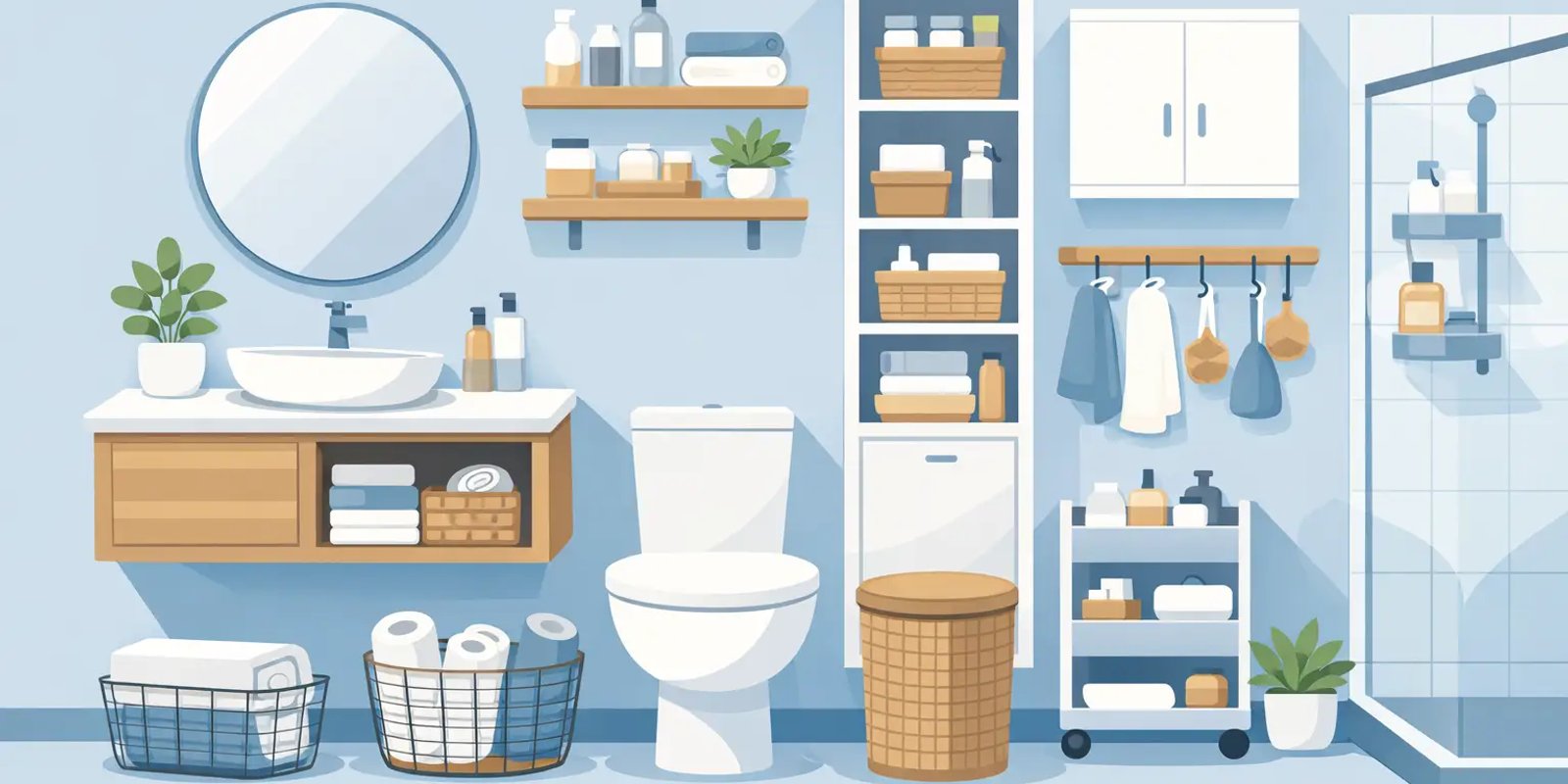

When your bathroom counter is crowded with toothbrushes, skin care, extra soap, and a hair dryer that never seems to fit anywhere, the room starts working against you. The best small bathroom storage solutions fix that problem by making every inch do a job, without making the space feel tighter or more cluttered.
In many Lehigh Valley homes, especially older ones, bathroom storage was never designed for how families actually live now. A pedestal sink looks clean, but it gives you nothing underneath. A shallow medicine cabinet helps a little, but not enough. Even newer homes can have bathrooms that are short on practical storage because the layout favors looks over daily function. That is where smart planning matters.
Why small bathrooms get cluttered so fast
A small bathroom usually has two problems at once. First, there is not much square footage. Second, the room has to hold a surprising number of everyday items, from towels and toilet paper to cleaning products and personal care supplies. When storage is limited, those essentials end up on the vanity top, over the toilet, or shoved into random baskets that never really solve the issue.
The bigger problem is that not all storage works the same way. Open shelving can look nice in photos, but it often makes a busy bathroom feel more crowded. Oversized vanities may give you more cabinet space, but they can also choke the walkway and make the room harder to use. Good storage is not just about adding more places to put things. It is about choosing solutions that fit the room, the layout, and the people using it every day.
Small bathroom storage solutions that add function
The most effective approach is usually a mix of built-in storage, smarter fixtures, and a cleaner layout. That balance matters because one oversized fix can create a new problem somewhere else.
Upgrade the vanity before adding more furniture
In many bathrooms, the vanity is the best place to start. If your current vanity has a large sink base with very little usable room, replacing it can make an immediate difference. Drawers are often more practical than deep cabinets because they keep small items organized and easy to reach. Pull-out storage also helps reduce wasted space around plumbing.
A floating vanity can be a strong option in a tight bathroom because it opens up the floor visually and can make the room feel larger. That said, it may provide less enclosed storage than a full base cabinet. For some homeowners, a compact vanity with drawers offers the better long-term payoff. It depends on whether your priority is maximum storage or a lighter, more open look.
Use the wall space with intention
Wall-mounted storage works well in bathrooms where floor space is limited. Recessed medicine cabinets are especially useful because they add storage without pushing out into the room. In a remodel, a recessed niche near the vanity can also hold daily-use items and keep the countertop clear.
Over-the-toilet shelving can help, but only when it is sized correctly and installed cleanly. Bulky units often make a bathroom feel top-heavy. A built-in cabinet above the toilet usually looks more finished and gives you concealed storage for backup supplies.
Add storage where the shower already gives you room
Shower storage gets overlooked until bottles start lining the tub edge. Built-in wall niches are one of the simplest ways to improve function without sacrificing space. They keep shampoo and soap off the ledge and reduce visual clutter.
If you are remodeling the tub or shower surround, this is the right time to add niches in the right size and location. A niche that is too small or poorly placed becomes more frustrating than helpful. Good placement should match who uses the shower and what products need to fit there.
Hidden storage usually works better than open storage
There is a reason many professionally designed bathrooms feel calmer. They hide the mess. Open shelving has its place, especially for folded towels or a few decorative items, but it tends to collect visual clutter fast. In a small bathroom, that can make the whole room feel busier than it is.
Closed cabinetry gives the space a cleaner, more finished appearance. It also makes daily upkeep easier because not everything has to be styled or kept perfectly neat. If your goal is a bathroom that feels organized with less effort, concealed storage usually delivers better results.
This is especially true for family bathrooms. Kids, guests, and everyday use create a constant flow of products, paper goods, and cleaning supplies. A storage plan that depends on everything staying pretty and perfectly folded usually does not hold up for long.
Layout matters as much as storage itself
Some small bathroom storage solutions fail because the real issue is the layout. If the door swing cuts into the vanity, if the toilet crowds the cabinet, or if the tub wall leaves no room for practical storage, adding shelves will only do so much. Sometimes the better answer is to rethink the room.
A bathroom remodel can create storage by reclaiming dead space, adjusting fixture placement, or building cabinets into walls that were previously unused. In older homes, even a few inches gained in the right spot can make a vanity more functional or open up space for a linen cabinet. That kind of improvement is hard to achieve with off-the-shelf organizers alone.
This is where a custom approach pays off. A contractor who understands both finish work and layout planning can spot opportunities that are easy to miss. Instead of forcing storage into a bad setup, the room gets redesigned to work better from the start.
The best storage choices depend on how you use the bathroom
Not every bathroom needs the same solution. A powder room has different demands than a primary bath. A shared hall bathroom used by children and guests needs storage that is durable, easy to access, and simple to maintain. A primary bathroom may benefit more from drawer organizers, double-sink cabinetry, and built-in linen storage.
That is why the best plan starts with use, not just appearance. Think about what needs to stay in the room every day. Think about what should be hidden, what should stay within reach, and what can live elsewhere. A nice-looking cabinet does not help much if it cannot hold your actual routine.
For homeowners planning to stay in their homes long term, it is also worth considering how storage needs may change. Better accessibility, easier reach ranges, and less bending can make a bathroom more comfortable over time. Good function now should still make sense years from now.
When a remodel makes more sense than storage add-ons
There is a point where baskets, racks, and cabinet inserts stop being the answer. If your bathroom still feels cramped after basic organizing, the problem may be the room itself. A remodel can solve multiple issues at once by improving storage, circulation, lighting, and fixture placement together.
For example, replacing a pedestal sink with a well-built vanity can transform the room. Swapping a standard mirror for a recessed medicine cabinet adds storage without taking up more space. Building wall niches into the shower, adding custom cabinetry, or redesigning the layout around the way your household actually uses the bathroom can turn a frustrating room into one that feels calm and efficient.
That kind of upgrade is not just about convenience. It can also improve the home’s value and daily livability. Buyers notice bathrooms that feel organized and thoughtfully designed, and homeowners feel the benefit every single morning.
In a market like the Lehigh Valley, where many homes have character but not always modern storage, practical bathroom improvements can make a real difference. Veteran Grains works with homeowners who want more than a cosmetic update. They want a bathroom that functions better, looks cleaner, and supports everyday life without constant workarounds.
Small changes can help, but built-in solutions last longer
If you need a quick fix, you can improve a small bathroom with drawer inserts, under-sink organizers, and better towel storage. Those changes have value, especially when the room only needs a little more order. But if the bathroom has ongoing storage problems, built-in improvements usually provide the best long-term return.
Custom cabinetry, recessed storage, and layout-driven remodeling cost more upfront than temporary add-ons, but they also solve the root problem instead of treating the symptoms. The right choice depends on your goals, your budget, and whether this is a short-term fix or part of a broader home upgrade.
A bathroom should not feel like a daily storage puzzle. When the room is planned well, everything has a place, the surfaces stay clearer, and the space feels easier to use. If your current setup is forcing you to compromise every day, that is usually a sign the bathroom needs a better solution, not just more containers.




















 (610) 618-6063
 info@veterangrains.com
 4915 Lower Macungie Rd, Macungie, PA 18062