


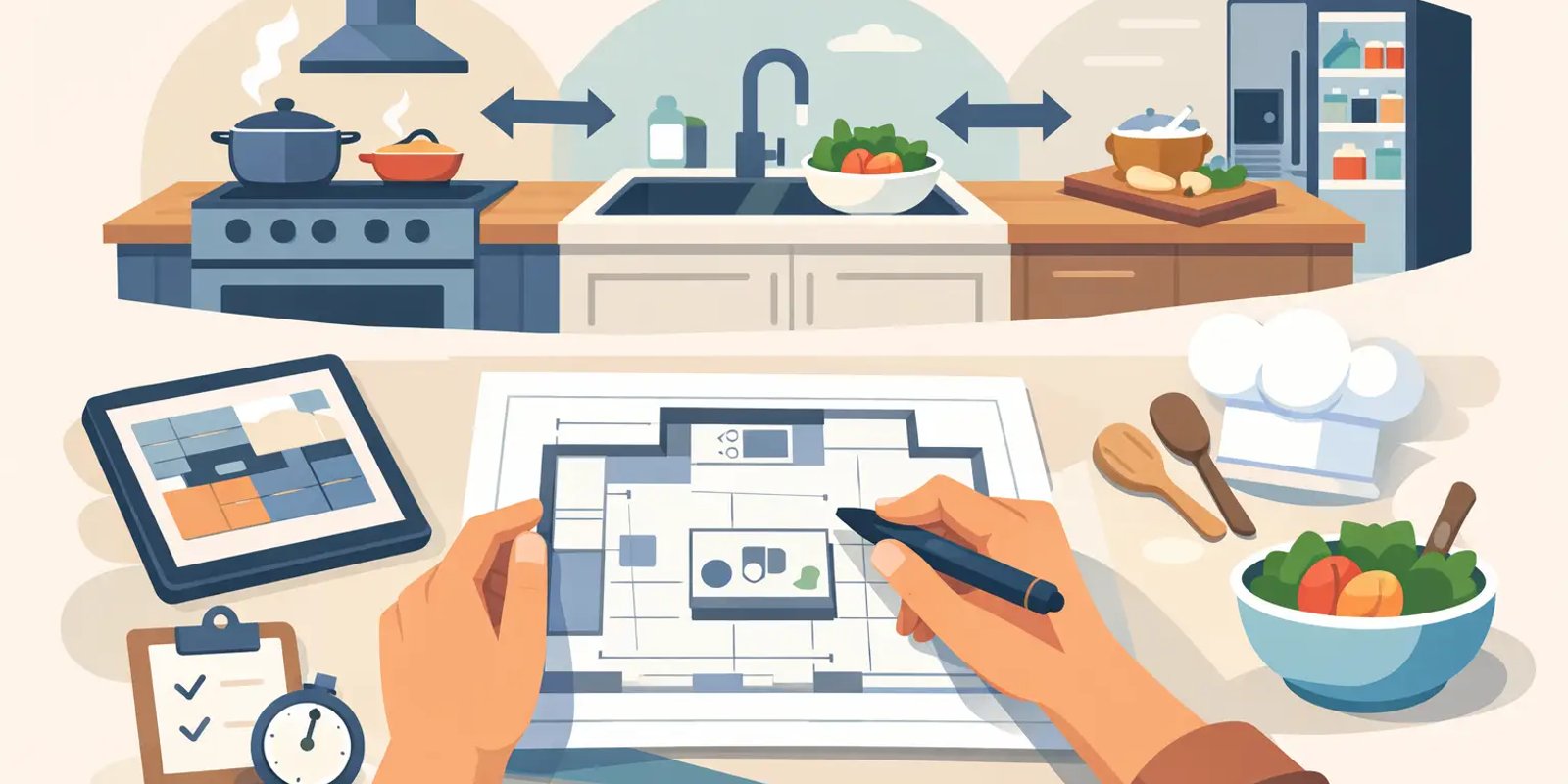

A kitchen can look beautiful on day one and still frustrate you every morning after that. The problem usually is not the cabinet color or the countertop material. It is movement. If you are figuring out how to plan kitchen workflow, start by paying attention to the steps you take to cook, unload groceries, pack lunches, and clean up. Good kitchen design should reduce wasted motion, prevent traffic jams, and make everyday tasks feel easier.
For many Lehigh Valley homeowners, this matters even more in older homes where layouts were built for a different era. Tight door swings, awkward corners, shallow counters, and limited storage can turn simple meal prep into a chore. A better workflow does not always mean a bigger kitchen. It means a kitchen that fits the way your household actually lives.
What kitchen workflow really means
Kitchen workflow is the way people, tools, food, and cleanup move through the room. It covers where groceries land when they come in, where food gets stored, where prep happens, where cooking happens, and where dishes go afterward. When the layout is working, these steps feel natural. When it is not, you are crossing the room too often, opening doors into each other, or competing for space with family members.
That is why planning workflow should happen before you choose finishes. A kitchen remodel can absolutely improve style and resale value, but function is what you will notice every single day. If the sink is too far from the prep area or the refrigerator blocks the main path, even high-end materials will not fix the annoyance.
How to plan kitchen workflow around daily habits
The most reliable starting point is not a showroom photo. It is your routine. Think through a normal weekday and be honest about how your kitchen gets used.
Do you cook from scratch most nights, or do you need fast access to reheating and cleanup? Do two people prepare meals at the same time? Are kids grabbing snacks and drinks throughout the day? Do you entertain often, with guests gathering around the island? These details shape the layout more than trends do.
A household that cooks heavily usually needs generous prep space between the sink and range, strong ventilation, and storage near the work zones. A family with school-age children may benefit more from a separate snack area or microwave placement that keeps traffic away from the main cooking path. If one person does most of the cooking while others pass through to the backyard or mudroom, traffic control becomes a major priority.
This is where trade-offs come in. An oversized island can look impressive, but if it squeezes walking clearance or creates pinch points, it hurts workflow. Open shelving can feel airy, but it may not support the storage needs of a busy family kitchen. The right plan depends on your space, your habits, and how long you expect to stay in the home.
Start with the five main kitchen zones
A practical way to organize workflow is to think in zones rather than just appliances. Most kitchens revolve around five basic zones: consumables, non-consumables, prep, cooking, and cleanup.
The consumables zone includes the refrigerator and pantry storage. This is where groceries and everyday food items live. It should be easy to access when coming in from the garage, side door, or main entry point used for shopping trips.
The non-consumables zone holds dishes, glasses, flatware, containers, and small kitchen tools. This zone should support both meal prep and unloading the dishwasher. If plates are stored across the room from the dishwasher, the layout creates extra steps every day.
The prep zone needs enough uninterrupted counter space to chop, mix, assemble, and stage ingredients. In many kitchens, the ideal prep area sits between the sink and the range. That arrangement keeps washing, cutting, and cooking connected.
The cooking zone centers on the range, cooktop, wall oven, microwave, and nearby landing space. Pot and pan storage should be close by, not on the opposite side of the room.
The cleanup zone includes the sink, dishwasher, trash, and recycling. These pieces should work together. If the trash pullout is across a walkway from the sink, cleanup becomes less efficient than it needs to be.
Use the work triangle carefully, not blindly
Most homeowners have heard of the kitchen work triangle, which connects the sink, refrigerator, and range. It is still useful, but it is not a rule that should override everything else.
In smaller kitchens, the triangle often helps keep the core tasks close together. In larger kitchens, especially ones with islands, double ovens, or multiple cooks, zones are usually more important than forcing a perfect triangle. A well-designed kitchen may include a prep sink, a beverage station, or separate work areas that make the room function better than a simple triangle ever could.
The goal is not geometry for its own sake. The goal is practical movement. You want enough closeness for efficiency, but not so much crowding that doors collide or people bump into each other.
Pay attention to clearances and traffic paths
This is where many kitchen plans succeed or fail. Even strong-looking layouts can feel tight if aisles are too narrow or if major appliances open into one another.
Walkways through the kitchen should not cut directly through the main prep and cooking space if you can avoid it. If people regularly cross behind the cook to reach a hallway, patio, or laundry area, the room will always feel busier than it should. In family homes, that can quickly become both frustrating and unsafe.
Dishwasher placement deserves special attention. When the dishwasher door is open, can someone still walk by? Can cabinets and drawers still open? Can dishes be unloaded into nearby storage without turning around repeatedly? These are small details on paper, but they matter in daily use.
Refrigerator doors are another common issue. The fridge should be easy to reach from the entry point where groceries come in, but it should not stop others from moving through the kitchen when the doors are open. A few inches in either direction can make a real difference.
Match storage to the task, not just the wall space
Storage works best when it is planned around use. Deep drawers near the range are more practical for pots and pans than a faraway base cabinet with hard-to-reach shelves. Trash and recycling should sit close to prep and cleanup areas. Spices, oils, utensils, and cutting boards should be near where they are used, not grouped somewhere because there happened to be an empty cabinet.
This is also where custom cabinetry can improve workflow in a meaningful way. Older homes in places like Bethlehem, Easton, and Allentown often have kitchens with awkward dimensions or original layouts that leave usable storage on the table. Tailored drawer configurations, corner solutions, and pantry design can make a modest kitchen function like a much larger one.
That said, more storage is not always better if it creates bulk in the wrong places. Tall cabinetry can add capacity, but too many large cabinet runs can make the room feel closed in. Good planning finds the balance between access, capacity, and openness.
Plan for real-life kitchen use, not a staged photo
A kitchen is a working room. That means your layout should account for backpacks on school mornings, holiday cooking, coffee routines, and weeknight cleanup when everyone is tired.
If you entertain, think about where guests naturally gather. An island with seating can be a great asset, but only if it does not interfere with prep and cooking. If you want people in the kitchen, give them a place to be that keeps them out of the main work path.
If your kitchen serves as a command center, consider where mail, devices, pet supplies, and small appliances belong. Without a plan for these everyday items, clutter quickly takes over the counters meant for prep.
For homeowners considering a remodel, this is one reason a hands-on planning process matters. A contractor who asks how you use the space, where your pain points are, and what changes would reduce stress is far more valuable than one who simply swaps out finishes. At Veteran Grains, that kind of practical planning is part of building a kitchen that does its job long after installation day.
When layout changes are worth the investment
Not every kitchen needs a full reconfiguration. Sometimes workflow improves with better storage, new cabinetry, updated appliance placement, or a more efficient island design. Other times, walls, doorways, and plumbing locations are the real source of the problem.
If your kitchen feels crowded despite decent square footage, or if multiple traffic routes cut through the room, layout changes may be worth considering. The same goes for homes where the kitchen is isolated from dining or family space in a way that no longer fits how the household lives.
The right answer depends on budget, structure, and long-term goals. A full layout change costs more, but in some homes it solves daily frustrations that cosmetic updates never will. If you plan to stay for years, that investment can make sense.
A well-planned kitchen should feel steady and predictable. You should be able to move from groceries to storage, from prep to cooking, and from meals to cleanup without extra steps or constant workarounds. When the workflow is right, the whole room becomes easier to live in, and that is what good remodeling should deliver.



















 (610) 618-6063
 info@veterangrains.com
 4915 Lower Macungie Rd, Macungie, PA 18062