


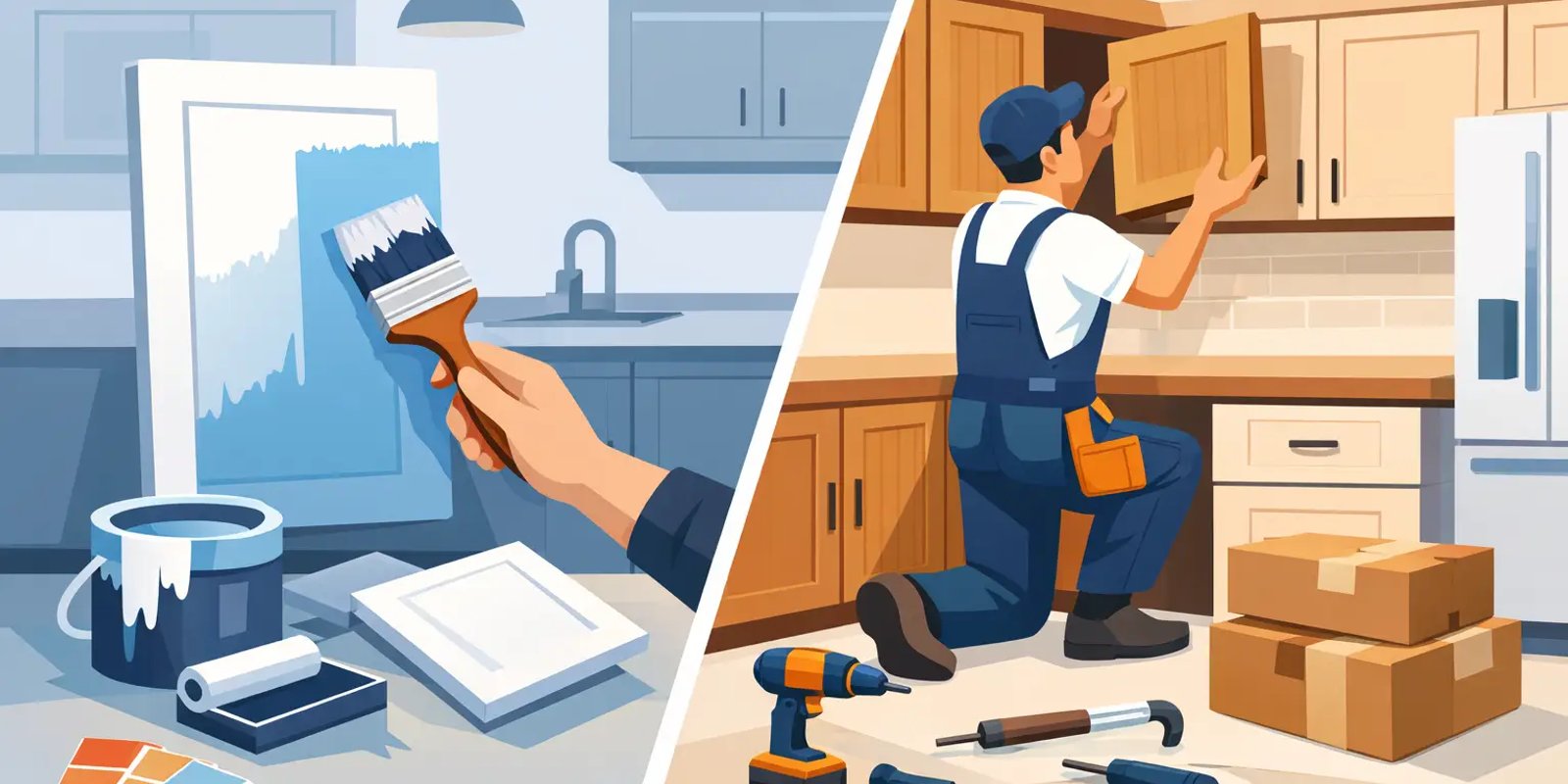

A lot of kitchen projects start with the same moment - you walk in, look at the cabinets, and realize they are dragging the whole room down. That is where cabinet painting vs replacement becomes a real decision, not just a design preference. For many Lehigh Valley homeowners, the right answer depends on what shape the cabinets are in, how long you plan to stay in the home, and whether you want a visual refresh or a full reset.
This is one of those remodeling choices where the cheaper option is not always the smarter one, and the bigger investment is not always necessary. If you look at the condition of the existing cabinets, the layout of the kitchen, and the way your family actually uses the space, the decision gets much clearer.
Cabinet painting vs replacement starts with cabinet condition
The first question is simple. Are your current cabinet boxes and doors worth saving?
If your cabinets are structurally sound, open and close properly, and were built with decent materials, painting can make a lot of sense. Solid wood cabinets, hardwood veneer, and well-built older cabinets are often strong candidates. Many older homes in areas like Bethlehem, Easton, and Allentown have cabinets that may look dated but still have solid bones.
If the cabinets are swollen from moisture, warped, peeling apart, or made from low-grade materials that are already failing, replacement is usually the better route. Paint can improve appearance, but it does not fix structural weakness. If shelves are sagging, drawer boxes are loose, or hinges are pulling out of compromised material, cosmetic work only goes so far.
There is also a middle ground. Sometimes the cabinet boxes can stay, but doors, drawer fronts, and hardware need to be updated. In those cases, a contractor may recommend a hybrid approach instead of an all-or-nothing decision.
When painting is the smarter investment
Cabinet painting is often the right choice when your kitchen works well as-is and the main issue is appearance. If the layout makes sense, storage meets your needs, and the cabinet construction is still solid, painting can deliver a major visual change without the cost and disruption of full replacement.
This is especially true for homeowners who want to brighten a dark kitchen, modernize heavy wood tones, or prepare a home for resale without taking on a full remodel. A clean cabinet finish paired with updated pulls, new countertops, or a tile backsplash can change the entire feel of the room.
Painting also tends to reduce downtime compared to a full cabinet tear-out and install. That matters if your kitchen is heavily used and you want the project completed with less disruption to daily life. For busy households, shorter timelines are not a small detail. They affect meals, routines, and stress levels.
That said, cabinet painting is only worth it when the prep and finish work are done correctly. Good results come from cleaning, sanding, repairs, priming, and using coatings made to hold up in kitchens. Shortcuts show quickly on cabinets because these surfaces get touched, bumped, and cleaned constantly.
When replacement makes more sense
Cabinet replacement becomes the better option when the problem is bigger than color.
If your kitchen layout is inefficient, your storage is lacking, or the cabinets were poorly designed from the start, painting will not solve the real issue. You may still be left with awkward corners, wasted space, shallow drawers, or cabinets that make the room feel cramped. In that case, replacement gives you the chance to improve how the kitchen functions, not just how it looks.
Replacement also makes sense when you want to rework the entire room. If you are changing appliances, moving plumbing, opening walls, adding an island, or adjusting traffic flow, new cabinetry is often part of that larger plan. Trying to preserve old cabinets during a major redesign can create limitations that are not worth forcing.
Another common reason for replacement is sizing and style. Older cabinets may have odd dimensions, narrow frames, or dated door profiles that still feel out of place even after paint. Homeowners looking for full-height uppers, deeper drawers, pantry storage, soft-close hardware, or custom organization usually need new cabinetry to get those features.
Cost matters, but so does value
For most homeowners, budget is the first factor they consider, and understandably so. Painting is generally less expensive than replacing cabinets, sometimes by a significant margin. That lower price can free up budget for other improvements like counters, flooring, lighting, or drywall repair.
But cost by itself is not the whole story. The better question is what you are getting for the money.
If you spend less on painting and get another five to ten years out of a solid kitchen that still works for your family, that can be a strong return. If you spend money painting cabinets that are already near the end of their useful life, you may end up paying twice - once for the cosmetic update and again for replacement later.
On the other side, replacement costs more upfront, but it can solve multiple issues at once. Better storage, improved layout, upgraded materials, and a more durable long-term result may justify the investment, especially if this is the kitchen you plan to live with for years.
A dependable contractor should be willing to walk through both scenarios honestly, not push the bigger job by default.
Cabinet painting vs replacement for older homes
In the Lehigh Valley, many homeowners are working with older houses that have a lot of character and a few hidden surprises. That makes cabinet painting vs replacement a little more nuanced.
Older homes often have cabinetry that was built better than many stock options available today. If those cabinets are solid and the kitchen layout still serves the home, painting can preserve quality materials while bringing the room up to date.
At the same time, older homes may have out-of-level floors, plaster issues, outdated wiring, or signs of past moisture damage. Once work begins, replacement may reveal opportunities or problems that affect the broader kitchen project. That is one reason experienced project planning matters. The cabinet decision should not be made in isolation from the rest of the room.
For homeowners trying to balance charm with practicality, the right answer is often based on how much of the kitchen you want to preserve and how much you want to improve.
Appearance, durability, and daily use
Homeowners sometimes assume replacement automatically means better durability. That is not always true.
A well-executed cabinet painting job on quality existing cabinets can hold up very well. In some cases, older cabinet boxes are sturdier than newer budget replacements. The key is whether the original materials are worth investing in and whether the finish process is handled professionally.
Replacement offers more control over style and features, but durability depends on what is being installed. Not all new cabinets are created equal. Material quality, joinery, drawer construction, hardware, and installation all affect how well the cabinets perform over time.
Think about how your kitchen gets used. A household with young kids, heavy cooking routines, and constant traffic may need a different solution than a homeowner updating a lower-use space. Practical use should carry as much weight as aesthetics.
How to make the right call
A good decision usually comes down to four things: condition, layout, budget, and long-term plans.
If the cabinets are solid, the layout works, and you want a major visual improvement at a lower cost, painting is often the practical move. If the cabinets are failing, the kitchen does not function well, or you are planning a more substantial remodel, replacement is usually the better investment.
It also helps to think beyond the cabinets themselves. Countertops, backsplash, flooring, trim, and wall condition all influence whether painting will feel like enough. Sometimes a kitchen does not need to be gutted. Sometimes it does. The difference is whether the current room still gives you something worth building on.
That is where a clear, honest estimate matters. A contractor who understands both finish work and full remodeling can help you compare options based on the actual condition of your kitchen, not guesswork. At Veteran Grains, that kind of practical guidance is part of keeping remodeling straightforward and aligned with the homeowner's goals.
If you are standing in your kitchen wondering whether to save what is there or start fresh, do not rush the call. The best choice is the one that fits your home, your budget, and the way you want that space to work every day.




















 (610) 618-6063
 info@veterangrains.com
 4915 Lower Macungie Rd, Macungie, PA 18062