


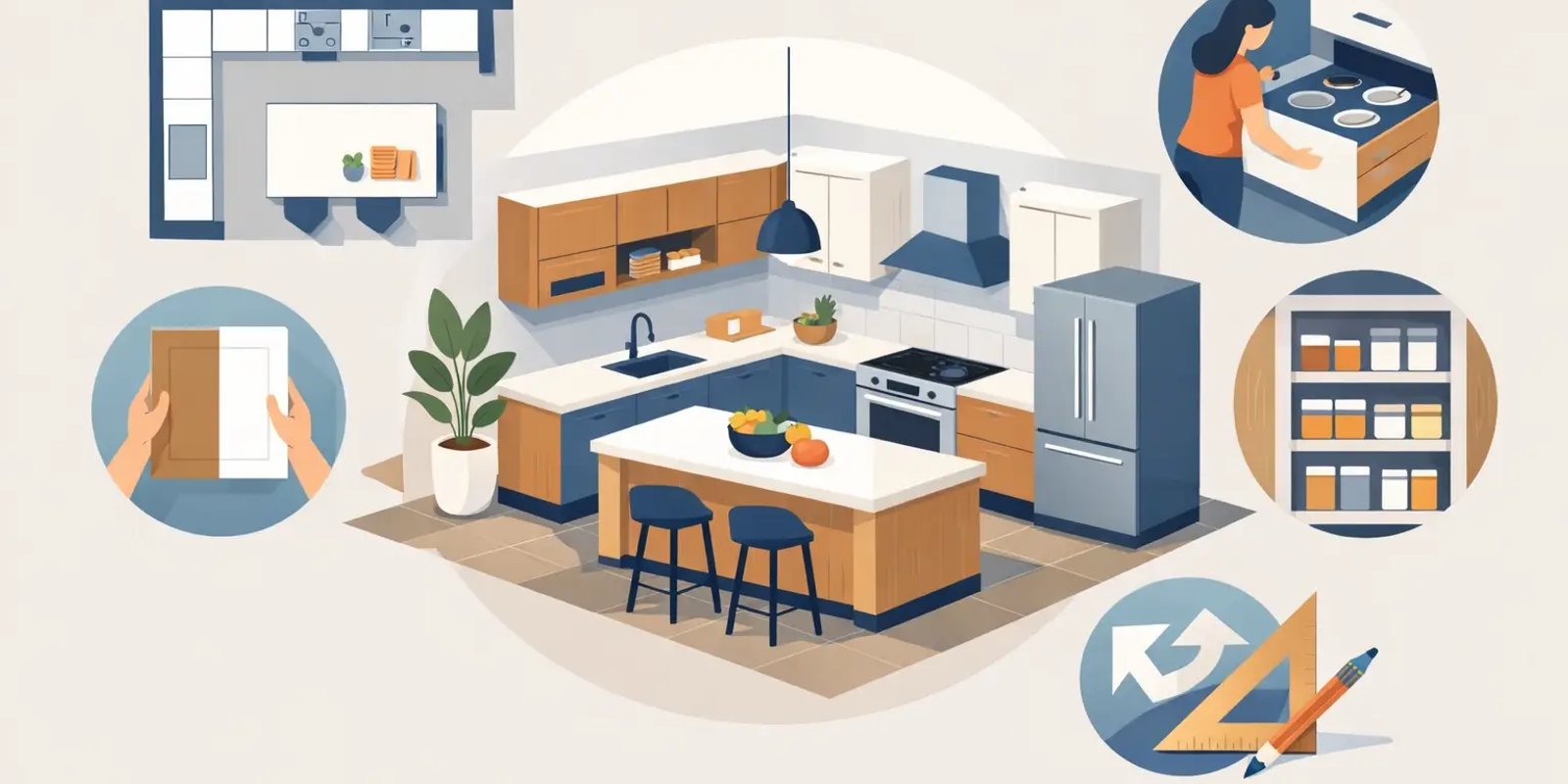

A kitchen can look great in a showroom and still frustrate you every morning at home. The difference usually comes down to layout. A smart custom kitchen cabinet layout does more than fill wall space - it supports how your household cooks, cleans, stores, and moves through the room every day.
That matters even more in Lehigh Valley homes, where kitchens often come with quirks. Older homes in places like Bethlehem, Easton, and Allentown may have uneven walls, tight footprints, radiator locations, low windows, or additions that changed the room’s proportions. In newer homes, the challenge is often different: plenty of square footage, but not enough thoughtful storage where people actually need it. In both cases, cabinet layout is where function is either won or lost.
What a custom kitchen cabinet layout should solve
A good layout starts with daily habits, not cabinet catalogs. If you cook from scratch most nights, your prep zone needs quick access to knives, cutting boards, trash pull-outs, spices, and cookware. If your kitchen handles school lunches, homework, and weekend hosting, storage has to support more than meal prep. That may mean deeper drawers for snack stations, a pantry wall that keeps clutter off the counters, or a built-in area for small appliances that usually end up in the way.
This is why stock solutions often fall short. Standard cabinet sizes can work in some kitchens, but they do not always use awkward corners well or account for how a family actually lives. A custom plan gives you more control over drawer depth, cabinet height, appliance spacing, and filler use. It also helps avoid the common problem of paying for a remodel and still ending up with dead space, traffic bottlenecks, or storage that looks good but works poorly.
Start with movement, not materials
Homeowners often begin by choosing door styles, paint colors, or countertop samples. Those details matter, but layout decisions should come first. Before a single finish is selected, the room needs to answer a few practical questions.
Where do people enter the kitchen, and where do they naturally stop? Is the refrigerator blocking traffic when the doors are open? Does the dishwasher interfere with the sink base or walkway? Can two people prep dinner without stepping around each other? These are not design trivia. They shape whether the kitchen feels calm or constantly crowded.
A dependable custom kitchen cabinet layout creates clear working zones. Prep space should sit near the sink and trash. Cooking tools should stay close to the range. Everyday dishes should be easy to unload from the dishwasher without crossing the room. Pantry storage should be easy to reach, not tucked into a corner where items disappear for six months at a time.
When the layout is right, the kitchen feels easier to use almost immediately. You are not thinking about where to put a mixing bowl or how to get around an open cabinet door. The room simply works the way it should.
Cabinet choices that improve daily use
The best cabinetry plans are usually the least flashy on paper. They rely on practical decisions that reduce friction over time.
Deep drawers in base cabinets are one of the biggest upgrades for most homeowners. They make pots, pans, mixing bowls, and food containers easier to access than traditional lower cabinets with fixed shelves. Full-height pantry cabinets can also outperform a walk-in pantry when space is limited, especially if the goal is visibility and access rather than sheer volume.
Corner storage depends on the kitchen. In some layouts, a blind corner cabinet with the right internal hardware is worth using. In others, it is better to avoid forcing storage into an awkward angle and instead shift the cabinet run for better function. That is where custom planning matters. Not every inch needs to be packed with cabinetry if doing so makes the room harder to use.
Upper cabinets also deserve more thought than they usually get. Ceiling-height uppers add storage and reduce dust-catching gaps, but they are not always the right fit if the room has low soffits, uneven ceilings, or windows that interrupt the run. Open shelving can lighten the look of a kitchen, but it also requires discipline. For many households, a mix of closed storage and a few carefully placed display areas is the better long-term answer.
Why older homes need a more careful cabinet plan
Many homes across the Lehigh Valley were not built around modern kitchens. Walls shift over time, floor levels vary, and original room dimensions do not always line up with standard products. That does not mean these kitchens cannot be improved. It means they need a layout built with the actual house in mind.
In older homes, a custom kitchen cabinet layout often needs to account for out-of-square corners, narrow passageways, chimney chases, or existing trim worth preserving. Sometimes moving a doorway or reframing a wall is the right call. Other times, the smarter choice is to work within the home’s structure and use custom cabinetry to make the most of what is already there.
This is also where experienced project planning matters. Cabinet layout does not happen in isolation. Flooring height, appliance specs, electrical locations, plumbing lines, lighting, and trim details all affect the final result. If those pieces are not coordinated early, small issues can turn into expensive change orders later.
Budget matters, and layout choices affect it
Custom does not have to mean extravagant, but it does require clear priorities. Some layout upgrades deliver strong everyday value. Others add cost without improving how the kitchen functions.
For example, extending cabinets to the ceiling, adding drawer bases, or building a better pantry zone usually pays off in daily use. On the other hand, highly specialized inserts in every cabinet can add up fast, and not all of them are necessary. The right investment depends on how you use the room and how long you plan to stay in the home.
A disciplined cabinet plan balances wish-list features with practical return. If the budget is tight, it may make more sense to focus on layout efficiency, durable materials, and a few high-impact storage upgrades rather than overloading the design with accessories. Good contractors will walk through those trade-offs honestly instead of pushing every available upgrade.
Common layout mistakes worth avoiding
One of the most common mistakes is overstuffing the perimeter with cabinets and leaving too little breathing room. More storage is not always better if it makes aisles too narrow or turns the kitchen into an obstacle course.
Another issue is poor appliance spacing. Refrigerators need landing space. Dishwashers need room to open without blocking circulation. Wall ovens should sit at a comfortable height. Microwave placement should make sense for the people actually using it, not just for symmetry on a drawing.
There is also the problem of ignoring countertop workflow. Cabinets support the counters above them, so layout should protect useful work surfaces. If every section of counter is broken up by tall cabinets, small appliances, or decorative choices, prep space disappears quickly.
These mistakes are avoidable when layout is treated as a working plan rather than a style exercise.
How to know your cabinet layout is right
A strong layout usually feels obvious once it is in place. Cooking is smoother. Cleanup is faster. Counters stay clearer because the storage actually makes sense. You are not walking extra steps to unload groceries or digging through one crowded base cabinet to reach a skillet.
That is the real value of custom work. It is not just about getting something unique. It is about getting something built around your home, your routines, and the way you want the kitchen to function for years to come.
For homeowners planning a remodel, the best first step is not choosing finishes. It is looking honestly at what frustrates you now. Maybe the pantry is too small, the island blocks traffic, or the lower cabinets waste half their depth. Those issues point directly to the layout changes that matter most.
A well-planned custom kitchen cabinet layout should make your kitchen easier to live in on an ordinary Tuesday, not just impressive when guests stop by. If the design does that, you are making the right investment. And if you are working with a contractor who values precision, communication, and craftsmanship, the process becomes a lot less stressful from the first measurement to the final install.



















 (610) 618-6063
 info@veterangrains.com
 4915 Lower Macungie Rd, Macungie, PA 18062