



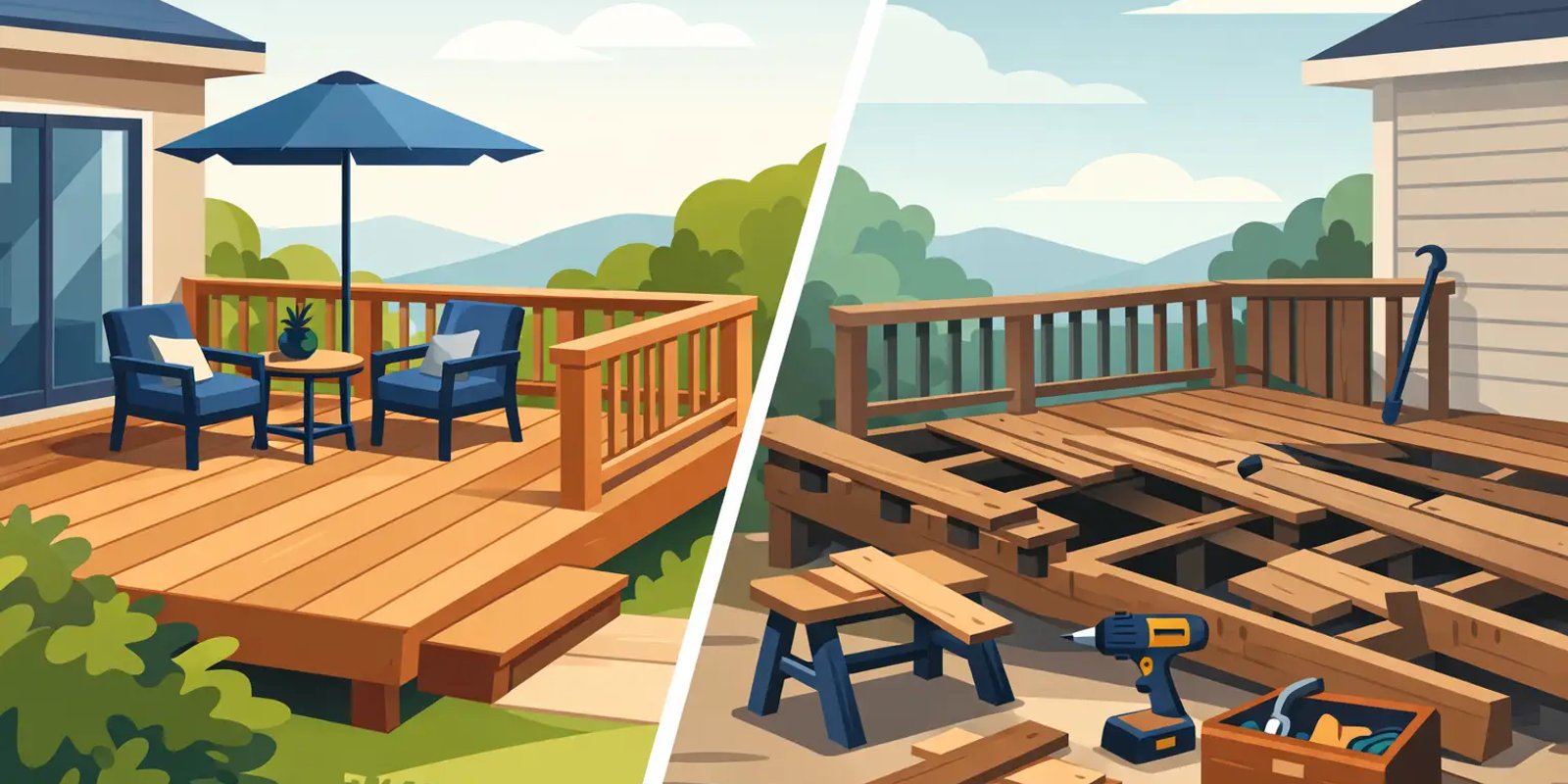

A deck can look fine from the yard and still be one bad board away from becoming a safety problem. That is usually where the new deck vs rebuild decision starts - not with color, rail style, or whether you want a bigger space for summer cookouts, but with the condition of the structure underneath.
For homeowners in the Lehigh Valley, that question often comes up after years of freeze-thaw cycles, heavy rain, sun exposure, and deferred maintenance from a previous owner. Some decks need a few targeted repairs. Others have reached the point where rebuilding part of the system only delays a full replacement. The right call depends on structure, cost, code compliance, and what you want from the space long term.
New deck vs rebuild: start with the structure
The surface boards are only one part of the story. A deck is a structural system, and the parts you do not immediately notice matter most. Posts, footings, beams, joists, ledger connections, flashing, fasteners, stairs, and railings all work together. If one major part has failed, the rest of the deck may be carrying stress it was never meant to handle.
A rebuild can make sense when the underlying frame is still sound and the problems are limited to a section of the deck or visible finish materials. That might include replacing worn deck boards, updating railings, rebuilding stairs, or correcting isolated framing issues. If the deck layout still works for your family and the main structure passes inspection, rebuilding selected components can be a smart use of budget.
A new deck becomes the better option when there is widespread rot, shifting, loose ledger attachment, undersized framing, failing footings, or code issues throughout the build. In older homes, it is common to find decks that were built to standards that no longer meet current expectations for safety or load requirements. In that case, putting money into piecemeal repairs can cost more over time than starting over with a properly designed structure.
When rebuilding is the practical choice
There are plenty of situations where a rebuild is not only possible, but responsible. If the deck frame is in good condition, the structure is properly attached, and the foundation is stable, targeted renovation work may extend the life of the deck for years.
This often applies when the visible wear is concentrated on the top side of the deck. Surface boards can cup, split, soften, or become slick long before the joists below have a problem. Railings may feel outdated or loose even if the main frame is solid. Stairs are another common trouble spot, especially when stringers have started to crack or the riser heights were never consistent.
In those cases, rebuilding selected portions gives homeowners a chance to improve appearance and function without taking on the full cost of a complete replacement. You might keep the existing footprint, install new decking materials, strengthen a few framing connections, and update the railing system to match your home better.
That said, partial rebuilds only work when the existing deck truly deserves to stay. If the frame is near the end of its service life, putting premium materials on top of weak structure is not money well spent.
When a new deck is the better investment
A full replacement usually makes more sense when safety concerns are stacked on top of design limitations. If your current deck is too small, poorly placed, structurally compromised, or built with multiple layers of past repairs, replacement gives you a clean path forward.
This matters for homeowners who want more than just a repaired platform. Maybe you want wider stairs to the yard, better traffic flow from the kitchen, safer rail spacing for children, improved lighting, or low-maintenance materials that hold up better in Pennsylvania weather. Those goals can be difficult to achieve through selective rebuild work if the original structure was never designed for them.
A new deck also gives you the opportunity to correct hidden issues completely. That includes proper flashing where the deck meets the home, correctly sized footings, updated hardware, modern guardrails, and framing that matches current use. If you plan to stay in the home for years, that kind of reset can provide better long-term value than repeated rounds of repair.
Cost is not just the price of construction
Most homeowners naturally focus first on project cost, and that is fair. But the new deck vs rebuild choice should not be based on the lower estimate alone. The better question is what the work actually buys you.
A rebuild can cost less up front because you are saving portions of the existing system. If the structure is sound, that is efficient. If the structure is questionable, the savings may disappear once demolition exposes damage. Hidden rot around posts, joist ends, stair attachments, or the ledger board can change the scope quickly.
A new deck usually costs more at the start, but it gives you a known foundation, a longer service life, and fewer inherited problems. It can also reduce future maintenance if you choose updated materials and details. For many homeowners, the real budget issue is not the initial number. It is whether they want to spend once for a durable result or spend in stages while chasing an aging structure.
This is where a clear inspection and transparent estimate matter. A dependable contractor should be able to explain what is salvageable, what is not, and where uncertainty exists before work begins.
Code compliance can tip the decision
Older decks often have code issues that were common at the time but would not pass current standards. Rail height, baluster spacing, stair geometry, ledger attachment, flashing, post connections, and footing depth are frequent examples.
If you are only replacing surface materials, some issues may be manageable within a limited scope. But once more substantial rebuilding starts, code requirements may apply to the updated work. That can push a project from a simple refresh into a larger correction.
This is not a reason to avoid the job. It is a reason to approach it honestly. A deck is not just an outdoor feature. It is a structure people rely on. If the deck is attached to the home and regularly used by family and guests, cutting corners to preserve an outdated build usually creates more stress later.
How your goals should shape the answer
The best decision is not purely structural or financial. It also depends on how you want to use the space.
If you are preparing to sell within a short timeline, a well-executed rebuild may be enough to improve appearance, address safety concerns, and avoid overspending. If you recently bought an older home and plan to stay for the long haul, a new deck may be the better move because it lets you build the space around how your family actually lives.
Think about whether the existing footprint works. Is there enough room for dining, seating, and grill clearance? Do the stairs land where they should? Does the deck feel connected to the home, or like an afterthought added by a previous owner? When those answers are no, replacement offers flexibility that repair work cannot.
In many cases, homeowners start by asking whether they can save the deck they have. After a proper evaluation, the more useful question becomes whether they should.
New deck vs rebuild in Lehigh Valley homes
Homes across Allentown, Bethlehem, Easton, Macungie, Whitehall, and surrounding communities vary widely in age, lot layout, and construction history. That means deck projects are rarely one-size-fits-all. A newer suburban home may have a deck with isolated weather wear and a healthy frame. An older property may have layers of old repairs, moisture exposure near the house, or structural settling that affects the footings.
Local weather also matters. Seasonal expansion and contraction, moisture, snow load, and long-term UV exposure all take a toll on decking materials and framing connections. A deck that looks manageable from above can tell a different story once the underside, fasteners, and connection points are inspected closely.
That is why disciplined planning matters. Veteran Grains approaches these projects the same way homeowners want them handled - with a clear assessment, straightforward pricing, and workmanship that solves the actual problem instead of covering it up.
What to ask before you decide
Before committing to either option, ask a few practical questions. Is the frame structurally sound? Are the footings stable and properly sized? Is the ledger correctly attached and flashed? Will a rebuild leave you with an old structure supporting new materials? And just as important, will the final result match how you want to use the space over the next several years?
Those answers should come from inspection, not guesswork. A trustworthy contractor will walk you through trade-offs, explain where repairs make sense, and tell you plainly when replacement is the safer or more cost-effective route.
A deck should feel solid when you step onto it, not like another project waiting around the corner. If you are weighing a new deck against a rebuild, the right path is the one that gives you confidence in the structure, clarity in the budget, and a finished space you will actually enjoy using.





















 (610) 618-6063
 info@veterangrains.com
 4915 Lower Macungie Rd, Macungie, PA 18062